Showing posts with label bhakti. Show all posts

Monday, June 27, 2016

"To Serve and To Love" - Reasons People Come to the Ashram


Divine Art of Yoga Center = DAYC Ashram = Gyan Yoga + Karma Yoga + Bhakti Yoga.

Fortunately, I have been associated with the Divine Art of Yoga Center (DAYC Ashram) and the Baijis for almost over 25 years. Nothing happens by accident; everything and everyone we encounter in life, the people and circumstances are opportunities for us to serve and to love. This ashram started with a handful of devotees seeking spiritual growth on this land of opportunities. Rakesh and I were blessed to serve the Ashram in the early 90’s and our daughter Suryanshi was born here as a miracle child. The Ashram is a spiritual hermitage where we perform yogas, music study or religious instructions. Baijis at the Ashram are living examples of Yoga in threefold. They both live a yogic lifestyle and inspire me to attain higher goals to be a Yogi in true sense. Suryanshi loves to come with me to the ashram and enjoys her stay with the baijis. Baijis connect with the youth with their unique perspective and love for the children. Their way of teaching inspires youth to be Yogis and attain focus and goals in their lives as well.

Peace of mind is difficult to attain because our minds are always changing. We restlessly pursue happiness outside of ourselves, preoccupied with our own self-interests, egoistic ambitions and opinions. Caught up in this cycle of seeking fulfillment everywhere but within, we fail to perceive or remember our true nature, which is already Blissful and Perfect. This human condition of striving to find peace externally is depicted in Vedanta philosophy as a condition of darkness and ignorance. Besides the theory of karma and reincarnation, which describes that we are here to learn from our mistakes and will repeat the same life lessons until we learn the correct way to think and to see ourselves, Vedanta philosophy, Yoga and Ayurveda offer us valuable guidance on how to progress towards peace of mind.

The formula is simple and can be described as a way of working with the three gunas or qualities of nature: 

1) break through the tamas
2) calm down the rajas
3) nourish the sattwa. 

By practicing these three steps I can fill my life and the lives of those around me with peace, joy, contentment, harmony, and balance.

I come to DAYC to seek guidance in my spiritual path= Gyan Yoga = Meditation. Meditation helps me to reflect and take part in something meaningful, to empower myself with knowledge of the self and understand that what I do matters. I have a calling to seek knowledge of a higher way of being in this world. I want to give back to a community that is changing the lives of so many people who are also seeking. Coming to DAYC helps me to continue learning about disciplining the mind and strengthening my connection with the divine. What I hope to achieve during my stay is mindfulness, unconditional love for all things, and happiness as that is what we truly are and to get in touch with my higher self!

karma yoga=Selfless Seva

It is a service performed to bring one in union with God or their higher self. Personally, I feel there is no better way to burn the ego and have total appreciation and gratitude for one’s life, than to serve others. The practitioner forgets their finite self through their service for others and the universe. Yoga for me is freedom. When I come to DAYC and serve, I can continually open my heart, and connect to those around me, I am doing the selfless act of giving my complete self to whatever is in my immediate presence. I believe karma yoga to be a path towards true happiness. I learn more about karma yoga to figure out how I can be most useful in changing the world for the better. I seek every day to become selfless—that is, to lose myself, and to experience everything as it is, as One.


Selfishness arises from us failing to realize that we gain more from giving than from taking. Our mistaken belief that we are separate from others leads us to behave selfishly. We fail to consider the deep interconnectedness and oneness of all life, and act from the small perspective of our own egos or personalities, creating more separation. Yoga teaches us to open up our awareness beyond our small and limited perspectives, and to begin to recognize the divine Self that is in all. Yoga teaches us that we are far more than our ego and the stories we assemble about who we are and what we like or don't like.

It teaches that we are happier when we begin to move out of our egoism and away from these thoughts, beginning to serve others, regardless of whether the mind likes it at first. Through this service, one begins to experience an expansion of his or her sense of self, feeling the deep joy that comes from moving beyond separation.

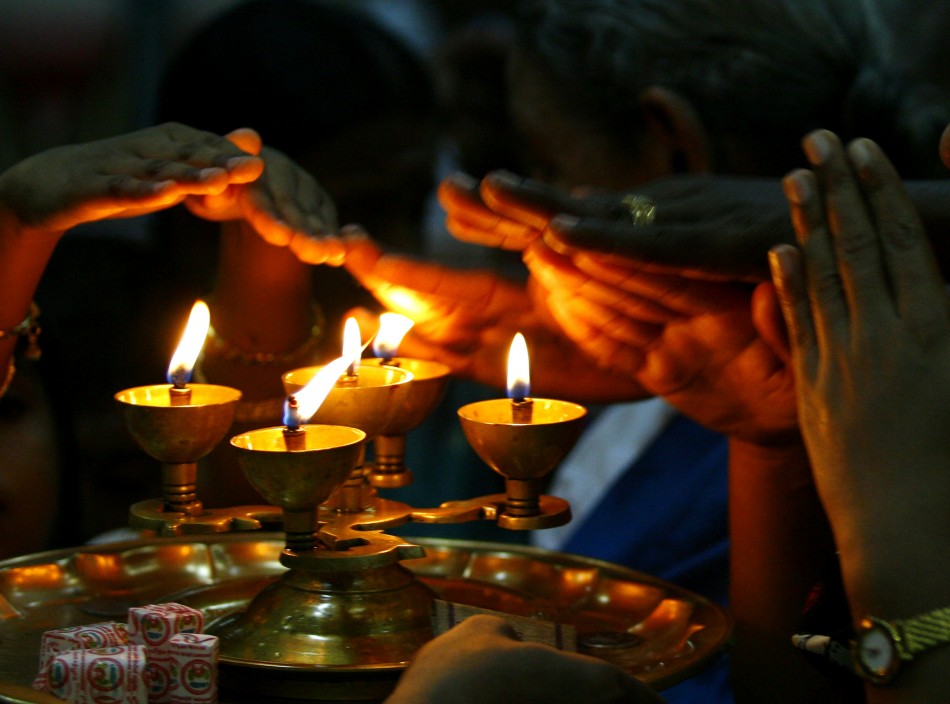
In life we often strive to define ourselves through our personalities, seeking to stand out in an egoistic way; but this is a mistake that leads to suffering. We forget that the way to get love is to offer love, not to try to be loved based on the limited personality. The more love we give, the more our lives will fill up with love. At DAYC We perform various offerings to God like singing bhajans, preparing bhog, reading and understanding various scriptures. This is called Bhakti Yoga which imbibes inner stillness that I believe brings true peace and fills my entire being with love and compassion. We all know this great feeling when we manage to let go of our individuality and feel a sense of oneness with another person or a group, and we also know the feeling of separateness that leads us to feel of isolated, unsupported or unloved. Therefore, the secret to happiness is to love selflessly. This love in action that leads us beyond selfishness is called Karma-Bhakti Yoga, or the Yoga of Selfless Love in Service.

Every Sunday, I feel like I must go. The universe has been pulling me on this path for many years—to open up my full heart to give my offerings to God, expansion on the deepest level. The power and knowledge within me can serve a community. It only needs ignition. My reasons for wanting to come to the ashram are for personal growth, learning, and exploration into deeper waters than I have been exposed to thus far in life. I consider this a unique and welcome opportunity for a weekly tune-up” in mind, body, and spirit. I think the ashram provides the perfect space for reflection, renewal and a platform to lessen my ego while working with a smile and an open heart.


Jai Sat Chit Anand to you all. May Peace and Harmony Prevail.

Sunday, January 10, 2016

One Who Has Experienced God Will Say I Know God


At a recent satsang, Gautum Baiji said:

"We have been listening to bhajans about various “bhakto” (well-known devotees) and how deep their devotion and love was, and with what level of “dhyan” (a deeper awareness of oneness that is inclusive of perception of body, mind, senses, and surroundings, yet remaining unidentified with it) they did “bhakti” (spiritual service and devotion). 

Which is in contrast to everyday people who feel they need to have good amounts of material wealth and time before they can do bhakti. The committed devotee does not look for the accumulation of wealth and time before practicing spirituality.

One day, Lakshman asks God what he can do to please God, because he knows that pleasing God is the best way to do bhakti. 

But what is our understanding of bhakti? When Draupadi was shamed in the presence of many people, she did not have any prayer beads to pray with or any idols in front of her. She had nothing, yet God came to her aid. Bhakti requires dhyan (profound meditation) and sadhana (a disciplined way of life designed to realize one’s ultimate goal of oneness with God). We perform rituals only to gain focus on bhakti and strengthen our “shraddha” (belief or trust). 


Sometimes people say they would do service (seva) and they ask us, "Can you do meditation on behalf of me?" but that's not the proper way. There are two things that humans have to do for themselves: eat and do bhajans (meditation). To keep doing service without having “gyan” (spiritual knowledge) will not give us “mukti” (spiritual liberation) or freedom from tensions of life. 

Service should not be burdensome; it should become effortless if you have gyan. Gyan has two parts: one is to have knowledge, and the other is to make that knowledge part of our lives and practice it.

For instance, one can hear and obtain knowledge of milk and know that it is white in color and that it is a liquid. The next person may actually see milk, smell it and touch it, but without experiencing its taste and value. However, the person who has heard of milk, seen it, and made it a part of their nutritional daily diet has the real meaning of gyan.


Having meditation technique and belief in God is not enough. You need to experience it. You may know there is petrol under the surface of the earth, and you have a strong belief that petrol exists under the earth. But that knowledge alone will not allow you to operate your car. You have to make an effort to get the gasoline in your possession and use it (experience) to run your car. 

One may believe in God and one can say I believe in God, but one who has experienced God will say I know God. 

Sometimes man does not have faith in what he knows but has faith in something that he does not know about (God). We believe in God but do not spend time and effort to truly know Him. 

To know God is to make your soul strong. One needs to focus with high concentration to know God by meditation, and that is “Sadhana”. Our mind is going in a hundred different directions, but if it is focused during meditation, it will have an immense strength to experience God.


Sun rays are spread everywhere, but they do not burn anything. However, if you use a magnifying glass and focus the rays in one spot, you can light paper on fire.


Likewise, our minds are spread out in many directions. Even while we are in a place of worship our minds are busy making a list of things to do! We need to take control of our mind and focus it into one sharp point in meditation to “burn the paper” and to reveal God. 

To control your mind is like controlling your car. If you do not control the steering wheel, the car will go in any direction the road takes you. But if you take charge of the steering wheel, it will take you where you want to go. Take charge and ownership of your mind. Be mindful – aware – (to be in dhyan) of where your mind is going and control it. 

If you watch a tightrope walker in a circus, her focus is on keeping balance and keeping her full attention on her steps on the rope. She is not distracted by applause from the audience or anything else.


We need to take the opportunity to practice meditation regularly and not spend our time in endless questions of why: Why did that person do this, why is he mad, why is the earth round, why why, why why?! - That is being bothered. It’s like punishing yourself.

We all do better if we are like water that flows with ease. It’s smooth and keeps finding its way to keep flowing through rocks and mud. It does not stop itself and wonder why there are rocks in its way. It does not get disturbed if someone steps in it. It is going for the ultimate goal of uniting with the ocean.


Water is useful to quench thirst, but if it hardens into ice it will not quench anyone’s thirst. In its hard form of ice, it will not flow easily to its destination. We have to cultivate our nature to be “Saral.” Do not be mistaken that being easygoing like a river is a sign of weakness. Look at the river that flows with ease and cuts through hard rocks with its easy, smooth flow. Rocks disintegrate to sand, but the river keeps flowing. You will see the hard rock is swept away by the river in the form of sand by the ocean. That is the power of “Saral.” For us to become hard will only lead to no one being able to deal with me, and it will keep us wondering why no one understands me! But, if we have an easy nature, many will be able to understand us and work with us. In meditation, also stay “Saral”!  


Reference material:

Meditation is the art of silencing the mind. When the mind is silent, concentration is increased and we experience inner peace in the midst of worldly turmoil. This elusive inner peace is what attracts so many people to meditation and is a quality everyone can benefit from. One feels happiest when sitting in perfect silence. The experience is difficult to express in words. It is also true that every meditation is not the same. Sometimes meditation is a struggle to control the mind, while at other times it feels effortless.

These are some of the benefits of meditation:
1.     Improved concentration – A clear mind makes you more productive, especially in creative disciplines like writing
2.     Less bothered by little things – Do you sometimes allow yourself to get upset by little things? It is the nature of the mind to magnify small things into serious problems. Meditation helps us detach. We learn to live in the here and now, rather than worrying about the past or future. We do not worry about meaningless things, but see the bigger picture
3.     Better Health – There have been numerous studies pointing to the health benefits of meditation. The reason is that meditation reduces stress levels and alleviates anxiety. If we can reduce stress, many health benefits follow.
4.     Knowledge of Self – Meditation enables us to have a deeper understanding of our inner self. Through meditation we can gain a better understanding of our life’s purpose.

The great thing about meditation is that our personal philosophy/religious beliefs are not important. Meditation is about consciousness. The beliefs of the mind become trivial. We dive deep into the heart of the matter to gain access to our soul – our inner reality.