Tuesday, October 27, 2015

Mini Satsangs


Gautum Baiji said, "We know what our practice is, and yet if we do not practice it, we cannot achieve our spiritual goals.

We can sit in front of the Gardens of God and not experience God at all.

The mind does not want to allow it. It doesn't want to become your slave. It says, "Follow me!"

Yet the mind is like a monkey - it can never stay in one place.

How can we concentrate the mind with the Holy Name? Because if you remember the Holy Name, all sorrows and pain can go away.

Meditation.


A philosopher said life is not full of joy or sorrow, it is filled with what you think it is filled with, what you decide it is filled with.

How can the bird get the fish in the water without getting wet? The same is true for us.

There are two things you have to do for yourself: eat, and meditate. If you want liberation and salvation, meditate.


A man came to a doctor and asked for a cure for his wife's deafness.

"Bring her here and I will examine her first," the doctor said.

"No, she will not come," the man said sadly.

"Well I at least need to know how serious the problem is, so here's what you do: stand 40 feet away and ask her something simple. If she does not respond, go to 30 feet, and so on."

So the man left. When he arrived at home, he stood 40 feet from his wife and said, "Will you make me some lentil soup?"

Nothing. So he moved 30 feet from her. "Will you make me some lentil soup?"

Still nothing. So he repeated it at 20 and 10 feet away with no success.

Finally he walked right to her and said right in her ear, "Will you make me some lentil soup-"

Suddenly she shouted, "I keep telling you over and over, make it yourself!"

Who was deaf? Him.


Happiness and sorrow will happen like the ebb and flow of the tide. The goal is to rise above and know joy and bliss through meditation.

The human body is one of the greatest miracles. Experiencing, seeing, hearing...

It has the capacity to realize God, as long as you practice your meditation.

Tuesday, October 20, 2015

The Kingdom's Secret - a Satsang


Dr. Ashok Modh, the Vice President of Divine Art of Yoga Center, gave the following satsang:

Once there was a king who ruled over a peaceful kingdom. There was no war ever, and the peasants were always very happy, even if they were poor. The whole kingdom was very peaceful and content.

One day a king from a nearby kingdom heard rumors about this happy kingdom and yearned to know their secret. So he sent his Minister to find out. 

When the Minister arrived, he did indeed discover that the town was quite happy. Then he happened to meet one of the king's daughters, and they fell for each other very quickly. When he asked her the secret to the town's happiness, she told him it was because of Neel Mahadev, a cave that possessed a powerful force for peace and happiness. He insisted he be able to see it. 


So she went to her father and asked him to meet the Minister because they wanted to get married. When they met, the Minister agreed to marry her, but on one condition, "I must see the secret in the cave. I must see the Neel Mahadev."

The king reluctantly agreed, but with a condition of his own. "You will be blindfolded to keep its location secret."

So he blindfolded him and led him through the forest until they came to the cave. 


When the Minister entered and removed his blindfold, he saw utter happiness among the townspeople there. They were singing, dancing and having a good time with each other.


The Minister turned to the princess and said, "I will deliver the message of this place to my king, and then come back and marry you."

So when the Minister returned to his kingdom, he told the king all about the wonders of the Neel Mahadev in the cave. The king was astonished and wanted to know more. "How can we find this place if you were blindfolded?"

The Minister said, "I didn't know if I would ever be able to go back or not, so what I did is put seeds in my pocket, which I cut a hole in. As we walked, the seeds would drop out and become planted in the soil. When you go, you just follow those plants and you will get to the cave." 


So this king gathered his forces and descended on the kingdom, conquering the whole town. Then they followed the plants... and found the cave completely empty. There was nothing there except the king.


Everyone is amazed. What happened here? Why is there nothing to be found? 

The king finally says, "Neel Mahadev is nothing but a state of mind. It's the peacefulness of the town that created Neel Mahadev. And when the peace went away, the Neel Mahadev went away."


It is the same with any organization, in any town or community: if we want Neel Mahadev, we need to develop peace, we need to develop harmony, and we need to help everyone work together. Then we can bring Neel Mahadev to help conquer the evil within us.

At the Divine Art of Yoga Center, we can allow the baijis to guide us as our spiritual leaders and help us find our bliss. 

Sunday, October 11, 2015

Satsang: Prana, the Mind, and Meditation


At satsang, Gautum baiji said:

"The mind... is so strong, yet so subtle.

It can bring salvation, or bondage.

We have thousands of thoughts, positive and negative. How can we control them so we can have peace?

The mind is so subtle, and to capture a subtle thing, we need a subtle method.

Suppose I want to tie up an ant. If I use a thick rope - the kind you would tie an elephant with - we can tie all the knots we want but there will still be holes big enough for thousands of ants to pass through.


An ant is very small, so if we want to tie it up we need a very fine thread.


So how do we control the mind?

Once there was a body where the organs were fighting with each other. Each organ thought they were the most important, and that without them, the whole body would perish.

Then the eyes said, "Fine, then I will leave for a month and only then will you realize you can't live without me."

So the eyes left for a month. Upon returning, they were surprised the body was functioning.

"How did you live without me?"

"We lived like a blind person. It was hard, but we managed," said the other organs.


The ears said, "Now it's my turn. I know you won't be able to live without me."

And the ears left. Thirty days later they returned.

"How did you live without me?"

"Like a deaf person. It was hard, but we managed."

Then the mind spoke: "Now you're really going to learn a lesson, because I'm leaving for thirty days and if you're still around when I return, I will listen to your tales of suffering."

Thirty days passed, and the mind returned to the body. "You're still alive? How did you live without me?"

"Like a simple child, but we survived."

Finally prana* spoke. "To show you my importance, I am leaving the body now..."


With the prana/life force gone, sudden changes occurred. The eyes became unable to see. The ears could no longer hear. Every single organ began failing.

It was no contest who was the most important.

Prana is like electricity - without it, no appliance can work.

We never think about the life force. We know the importance of not spending too much money, but not how we spend our life force."


So how do we control the mind? It is no coincidence that a good technique for deep meditation is to count... our breaths, our prana.

Meditate, breathe deeply, self realize.


* Prana - breath, considered as a life-giving force. Not merely the breath, air or oxygen, but also the original life force. Prana is a Sanskrit word constructed of the syllables pra and an. 'An' means movement and 'pra' is a prefix meaning constant. Therefore, prana means constant motion. This constant motion commences in the human being as soon as s/he is conceived in his mother's womb. Prana is therefore a type of energy responsible for the body's life, heat and maintenance.


Saturday, October 10, 2015

Understanding and "Innerstanding"


Gautum Baiji said feelings are like waves in the water.

Thoughts are like waves.


I asked if the waves were my soul "talking" to me.

She said we are the ocean. The om vibration is already there.

When we calm our mind through meditation, the waves (our thoughts and feelings) will go down and allow us to be the ocean, to be one with our soul.


Sunday, October 4, 2015

Baiji's Satsang - The Bird Trapper


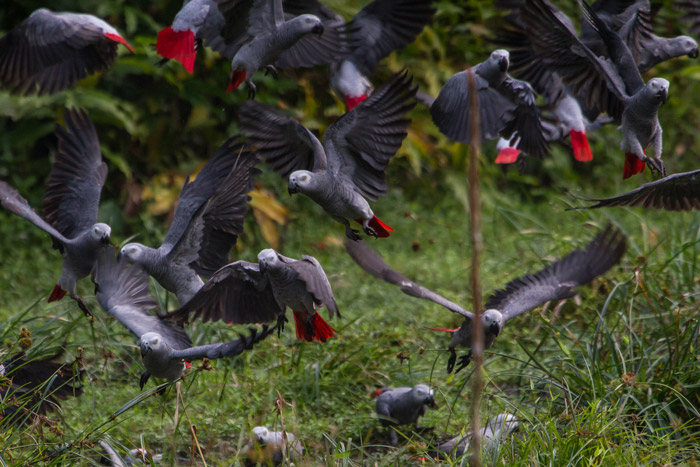
"A holy man was walking through the forest when he came upon a man who had a beautiful parrot in a cage. He asked him how he caught it.

'It's easy. I throw down seed until they come to eat it, then I throw my net on top of them. It's almost too easy.'

At this, the holy man had a thought, and decided to purchase the parrot from the trapper.

Once he had the bird to himself, he began to teach it phrases like, 'I'm not eating that seed, you'll catch me!' and 'I'm a smart bird who can see your nets!' These became the parrot's mantras.

Then the holy man let the bird go. When it was free, it went back to its friends in the trees and immediately began saying its new mantras.


The other parrots started repeating them until they were all saying the same mantras.

Later, the holy man came upon the bird trapper again, who now looked very depressed.

'Why are you so sad?' said the holy man.

'Because now the birds are too smart for me to catch them and I'm going to become poor.'

'Why can't you catch them?'

'Don't you hear? They're saying they're too smart for my tricks. They keep saying over and over that they know I'll throw my nets on them if they come eat my seed!'

'Throw your seed and they will still come, trust me," the holy man said.

The bird trapper doubted him, but did it anyway. Sure enough the birds came as usual, and he was able to easily trap them.


The same is true for our own mantras and meditation practice. It does us no good to say nice words over and over if we don't know their meaning, and it does us no good to sit in a meditative pose and not calm our mind sufficiently so our connection with God can happen.


Wednesday, September 30, 2015

Baiji Satsang: Be Intentional, or the River Will Take You


At Sunday satsang, Gautum baiji also said:

"When in pain, do we remember to address the God within us?

Just as a candle flame always goes up no matter which way you tilt it, the same can be said for the spirit inside of us, no matter what is happening with us.


Always try to connect with the holy power.

And we must ask ourselves, 'What is our goal in life? Where am I going?'

Maybe the answer is 'I don't know. I don't think like that.'

If we don't know where we're going, we will certainly get to a place we didn't ask for.


Sunday, September 27, 2015

The Princess and Her Necklace


During satsang today, Gautum Baiji said:

"You can purify your body with water. 

You can purify your mind with truth.

You can purify your intellect by knowledge.

You can purify your knowledge with understanding. And everything depends on our understanding.


Once there was a queen who enjoyed spending time in her garden. One day she returned to the palace to find that her necklace was missing from her neck. It must have broken and fallen in the garden.

The necklace was extremely valuable, and the queen knew the king would be angry if he knew it was missing, so she sent her maid to go find it.

But the maid came back empty-handed, so the queen knew she had to tell the king.

When the king heard the news, he wasted no time. He assembled all of his guards, his field workers, his kitchen staff and even some peasants to immediately go through the garden and search plant by plant, bush by bush for the necklace. 

But they searched all day and found nothing. So the king ordered everyone to look harder.

Finally a peasant saw something sparkly in a pond. He yelled to another peasant, 'I think that's the necklace!'


'Well go get it!' said the other peasant. So the first one waded into the water to retrieve it.

But for some reason, he's not able to grasp it, no matter what he does.

The king himself is summoned to the pond. He watches as more of his men go into the water and also fail to obtain the necklace they can all clearly see! They are perplexed and frustrated by this. 

An old wise man wandered by and learned of their dilemma. He thought for a moment and said:

'This reminds me of something that happened to me as a boy. I would go outside with my mother, look up at the moon and say "I want the moon! Can you give it to me?" She said yes, and brought me a bucket full of water. In it I could clearly see the moon reflected in the water.'


Then everyone looked down at the pond and realized they were looking at a reflection. They looked up and there, on a branch in a nearby tree, hung the beautiful necklace.

All scriptures are a reflection of truth, an indication. We tend to only chase the reflection.

If our body is a temple of God, and if we want to see the light, where else do we need to go than within? 


Someone who goes within, who meditates, might be asked by another, "Why go within? What's wrong with going to church or temple for wisdom and light? What's the difference between the inside vs. the outside?"

The answer is the difference between the reflection and the necklace, the map versus the treasure. An idea and the truth.


Sunday, September 6, 2015

Taming the Ghost - A Baiji Story


The baiji (nun) said: "Once there was a man who was very angry because he had too much work to do at home, too many chores for just one person. He always fell behind and never got any help, and this made him very frustrated.

So one day, he prayed to the gods for help.

And his prayer was answered, but in a way he did not expect:

A ghost appeared, ready to do his bidding. He was a working ghost, because he asked, 'What should I do?'


'Clean my house," the man said, and the ghost cleaned the house. This pleased the man.

'What should I do now?' the ghost asked.

'Plow my field and plant my crops!'

So the ghost did that, and he was soon asking the man for his next duty.

'Milk the cows and feed all the animals.' On and on, the ghost asked and did as he was told.

Too well. Soon, there was nothing left to do, but the ghost kept coming.

'What should I do now?!'


'Um, clean the house again.' The ghost did that, and continued haunting the man night and day for more chores. He was unrelenting, and the man was being driven crazy.

So he ran to his guru for advice.

The guru nodded and gave his best counsel: 'In front of your house, tell him to build a larger pillar. When that is complete, tell the ghost to climb up and down the pillar.'

'For how long?'

'Until you give him new instructions.'


The man saw the genius in this and went right home to build the pillar, solving the problem of the nagging ghost.

The same is true with our minds. For us to get any true freedom, the mind and all of its energy and drive must be tamed and set to the side through simple meditation. It can be done with practice.

If we do not do this and allow our 'monkey mind' to rule - we will not know true peace. We will even think that we 'are' our minds when who we are is so much more vast.


Sunday, August 30, 2015

The Greatest Gift God Has Given Us - Baiji's Satsang


Mahatma Gautum Baiji did her satsang this Sunday almost entirely in English. Here it is, paraphrased:

Yoga actually comes from yuj, to unite with our self.

So when we do that - when we practice yoga and unite with our selves - we tend to naturally experience questions like "Why are we living?"

Why are we living?

To achieve something.

Obtaining material things? No, we know there is more. So what do we really want to achieve?

Peace.

When we're missing peace, the mind is upset. Without peace, everything else - especially the material things - are useless.


And nobody is selling peace...

Cell phones can do many amazing things. They can make calls, give directions, bring you news, etc. But they won't do any of those things if you don't charge it.

But when you get home at night and are ready to charge it, do you merely set it on top of the charger without plugging it in? No - you must connect it.


In the same way, we cannot find peace outside of ourselves. We must connect to it.

If I say, "God is in my heart..." Is my heart in a temple? Is my heart in a church?

God is in my heart, which is inside of me. (The word yoga itself refers to linking with God.)

So we might then ask ourselves, what is God?

God is energy. Think of electricity. It's not a bulb, but it can light up a room. It's not the air conditioner, but it can cool the room, or heat the room through a heating unit.


Once we realize God is within our heart all the time, we will understand that we need nothing else. This is peace.

But we need the eye to see it.

If you have a mound of sugar and sand mixed together, an ant will always know where the sugar is - such is his ability to focus.

A magnifying glass can burn paper because of its ability to focus on it.

Once we realize that God is within our heart all the time, we will need nothing else.

Without it, we are wasting our life...

The ability to be still and go inside to experience this - to meditate - is the greatest gift God has given us.

In the Bagavad-Gita, it is the technique that Krishna gave to Arjuna.


And yet if someone says "Let's go to a movie," we're ready, but if someone says "Let's meditate for fifteen minutes," we're suddenly too tired. Or busy.

We can have a healthy body, but a sick mind from no meditation and too many worldly distractions helps no one.

If you have a boat in the water, you are fine. But if too much water gets in the boat, you will sink. The same with too much of the world...


With meditation, we can get whatever we want. And what do we want most?

Peace.


A Great To-Do List


Thursday, August 27, 2015

We Need More Gardeners


What a different world it would be...

From crime to mental health issues, homelessness. From students to office and factory workers.

And especially the raising of our children.

"When a flower doesn't bloom you fix the environment in which it grows, not the flower" is a statement that empowers us. It doesn't just state a problem - the solution itself is embedded.

And because it's an empowering statement, it doesn't make us victims.

It shifts our perspective and puts us in the driver's seat. That's why I shared it.

Thanks to Alexander den Heijer.